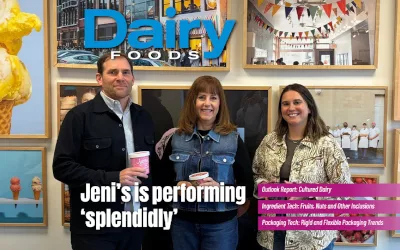
The February eMagazine highlights the innovation of Jenni’s Splendid Ice Creams in our Processor and Inside the Plant articles. While great-tasting products and flavors made with carefully sourced ingredients are central to the brand’s success, we get the scoop on franchising plans for the 25-year-old manufacturer. We explore the “all-pro” lineup of cottage cheese and yogurt in fueling Olympic and FIFA World Cup athletes,and examine fruits/nuts and inclusions’ dominance in ice cream and more. What’s new in rigid and flexible packaging? Expanding milk sales of nearly $18B, the growth in A2 milk and Pioneer Pastures’ founding, and demineralizing milk also are covered; plus much more!
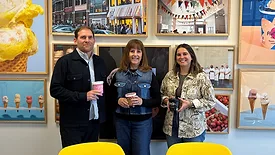
Jeni’s Splendid Ice Cream has grown steadily and is on track to reach over $150 million in 2025 revenue. Originating in Columbus, Ohio, it is now a nationally recognized brand.
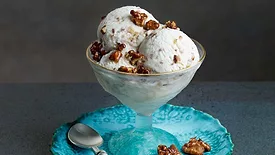
Discover how fruits, nuts, and textural delights are revolutionizing dairy and beverages, enhancing flavor and setting new standards for health and sustainability. From premium ice cream to innovative yogurt, explore the trends shaping this delicious culinary evolution!
With the 2026 Winter Olympics taking place this month and the upcoming FIFA World Cup, cultured dairy is playing an important part in athletes' training and recovery. Protein-packed products are in high demand.
Milk consumption appears to be rebounding, with the Dairy Milk category seeing a 3% increase in dollar sales to $17.7 billion. Similarly, the Refrigerated White Dairy Milk subcategory reported a 3% rise to $15.8 billion. While unit sales remained flat, this growth in revenue suggests a renewed consumer interest in milk.
As product specifications tighten and global demand for high-value dairy ingredients continues to grow, processors are increasingly relying on membrane technologies.
Explore how membrane technologies are changing milk demineralization to meet the rising demand for high-value dairy ingredients while balancing efficiency and product quality.
Normally, I run my predictions for the upcoming year in January. This year, I'm doing it in February, and I will summarize many of the prediction trends I have seen throughout the industry. Many of the experts have a great story about the future to tell.
A quick look at the composition of some cultured dairy products shows that they are well designed for GLP-1 diets. High-protein yogurts, including skyr and Greek yogurt, are the first products that comes to mind.
The healthfulness of ultra-processed foods often sparks debate, particularly regarding the definitions of "hyper-palatable." Many associate these foods with being unnatural and inherently unhealthy, overlooking scientific considerations to the contrary.
As individuals eat, two processes occur: satiation and satiety. Satiation is the gradual feeling of fullness during a meal, influenced by factors like sight, smell, and texture. Satiety, explained by Mary Wilcox, is the satisfied state after finishing a meal.
The dairy processing industry is evolving, leading to advances in packaging. According to Future Market Insights Inc., the global dairy packaging market is projected to grow from $25.9 billion in 2025 to $39.2 billion by 2035, with a compound annual growth rate of 4.2%.
Cleaning and sanitizing dairy processing equipment is a complex task influenced by the nature of dairy products, intricate equipment designs, strict regulatory standards (FSMA, PMO), and environmental conditions. Inadequate sanitation can lead to product recalls and outbreaks, especially when manual cleaning is required for dry systems or equipment with complex internal geometries, such as heat exchangers.